Sheet thickness, fastening method and the insulation below all affect how a TPO roof performs. Ask the roofer to explain each choice for your building. Call the number on this page to be connected with a local roofing contractor in St. Petersburg.
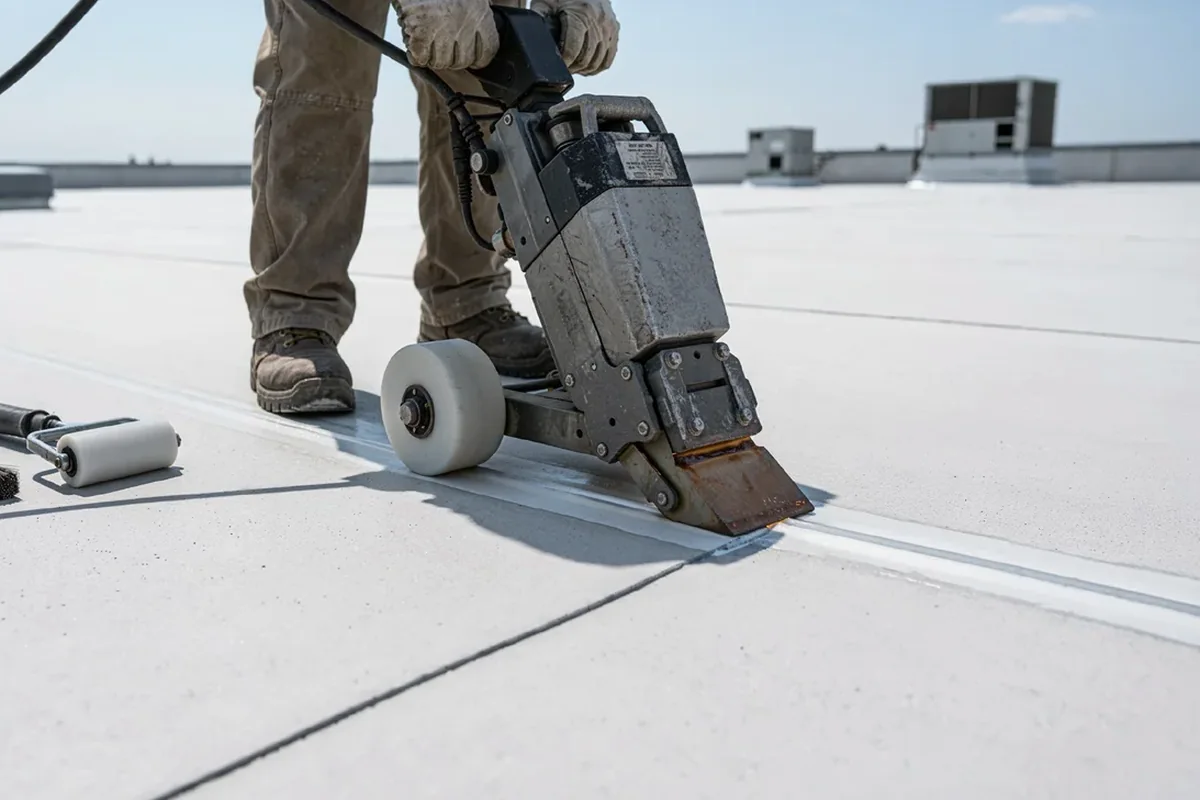
Single ply, not layers
Where torch-applied systems stack several sheets, TPO is one membrane, often a mechanically attached or glued layer over insulation boards. Fewer layers means a lighter roof, but it puts more weight on seam quality and detail work.
Moisture hiding in insulation
A small leak can soak the boards beneath, which then hold water against the underside of the sheet. A roofer may use a moisture survey or cut a test square. Wet insulation under TPO usually has to come out, not be sealed over.
With much of the housing in St. Petersburg dating to the 1960s, TPO is usually chosen to replace worn tar or roll roofing on additions, and the old deck needs a careful look first.
Attachment: glued, fastened or ballasted
A fully adhered sheet gives a smooth look and strong wind resistance but takes more labor. Mechanical fastening is quicker. Each affects price and performance, so ask the roofer why a particular method suits your roof and the wind exposure it faces.
Roof notes for St. Petersburg
Permit note from the St. Petersburg Building & Permitting: The city's single-family permit exemption does not cover roofing, soffit and fascia, or siding work, so roofing generally needs a permit.
Florida sets a deadline for storm claims: notice of a new or reopened property claim is due within one year of the date of loss, so don't sit on roof damage.
Florida insurers must offer discounts for wind-loss features such as roof-to-deck attachment and roof-to-wall connections, documented on a mitigation inspection form, so ask whether a reroof can add them.
Summer brings near-daily afternoon thunderstorms and frequent lightning to the Tampa Bay area, so small flashing gaps get tested often from about July into early September.
Much of the housing in St. Petersburg dates to the 1960s or earlier, so a tear-off can uncover older layers or plank decking that need extra work.
Contractors that take calls here usually also work in Pinellas Park, Seminole and Largo.
What the finished roof should show
Look for neat, even seams, no wrinkles at corners, tight flashing at walls and clean drain sumps. Ask for photos of hidden details before the crew leaves. A good finish looks clean from the ground and holds up after storms.
Do not patch with roof cement
Asphalt-based cement does not bond well to TPO and can damage the sheet. A temporary tarp, set without climbing, is safer until a roofer arrives. Mention what has already been applied so the repair crew can plan surface prep.
TPO Roofing questions in St. Petersburg
Is TPO a good roof for Florida heat?
What makes a TPO seam fail?
Is TPO safe to walk on?
Who handles roof repair in a condo or strip center?
More roofing services in St. Petersburg
TPO Roofing nearby
Helpful guides
Sources
Last updated: