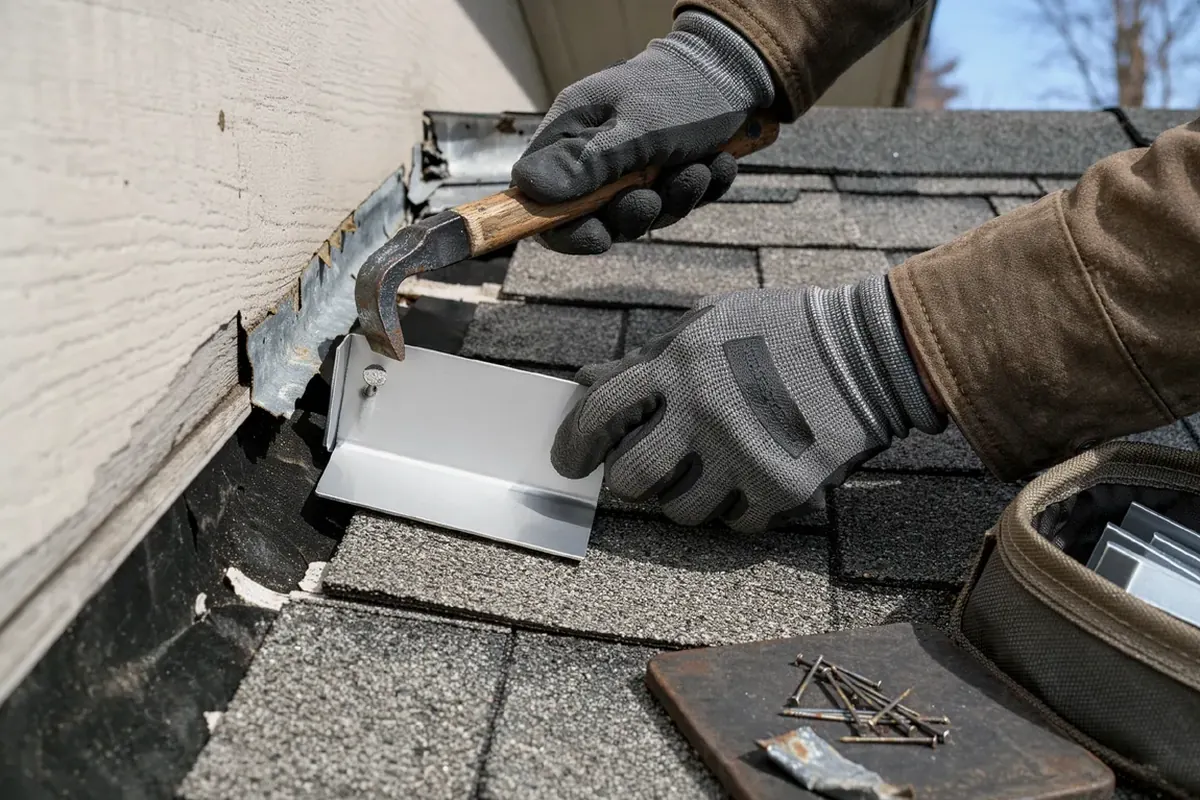
Stucco walls that rise above a roof are a common leak point on block homes, because the joint between the wall and the roof moves and its sealant dries out. A roofer can reflash it or add counterflashing in the stucco. Call the number on this page to be connected with a local roofing contractor in Spring Hill.
Questions to ask yourself
- Does the leak appear near a wall, vent or valley?
- Does it come with wind-driven rain?
- Is there rust or loose metal nearby?
Answers like these help the roofer search the right joints first and cut down the time on the roof. Write them down for the visit in Spring Hill.
Debris and standing water
Leaves and needles in a valley hold water against the metal, and shaded joints stay wet longer. Pinholes form, sealant lifts and rot begins in the wood below. Keeping valleys clear does help, though a roofer should do the work on the roof itself. A quick check of the valleys each season helps.
Shaded roofs around Spring Hill stay damp longer, which shortens the life of flashing and encourages rot in the wood beneath the metal.
Farther from the city in Spring Hill, roofers may travel some distance, so describe the leak location clearly when you call to help the visit go smoothly.
Before you call in Spring Hill
On permits, the Hernando County Building Division says: the residential roofing permit application covers both reshingle (recover) and reroof (replacement); the permit holder must request a final inspection within ten business days of completing the work.
After a storm, read every page before signing and check the contractor's state license on the DBPR site; Florida requires a state contractor license for paid roof work.
Florida's existing-building code caps repairs at a quarter of a roof section in any 12-month span; past that, the full section usually has to meet current code.
Hurricane season runs June 1 through November 30. Lifted tabs, cracked tiles, loose ridge caps and missing shingles are worth a look after any strong blow.
Big oaks and pines around Spring Hill drop leaves and needles that fill valleys and gutters and keep parts of the roof shaded and damp.
Nearby, the same kind of help is available in Hudson, Land O' Lakes and Port Richey.
Doing it with a reroof
If the roof is near its end, new flashing at the time of replacement is better than patching old metal. The flashing then goes in with new underlayment. A roofer should tell you whether to wait, repair now, or combine the work. Planning ahead saves paying for the same joint twice.
Valleys and open joints
Valley metal that is pinholed or clogged can be replaced with new metal under the roofing, which is more work than patching. Roofers sometimes choose a wider valley to shed storm flow. Ask how the valley will be built to handle heavy rain. This work is more involved than patching.
Lightning and wet roofs
Afternoon thunderstorms are frequent here, and lightning and slick surfaces make roof work unsafe. Wait until it passes and surfaces dry before any roofer works up there. Do not go outside to inspect during a storm. Safety always comes before inspecting.
Roof Flashing Repair questions in Spring Hill
What is roof flashing?
Why does flashing leak where the roof meets a stucco wall?
Can I fix loose flashing myself?
Is flashing damage covered by insurance?
More roofing services in Spring Hill
Roof Flashing Repair nearby
Helpful guides
Sources
Last updated: