Many owners choose torch-down for flat porch, carport and addition roofs because it handles standing water better than most steep-slope materials. Fit and workmanship still matter a great deal. Call the number on this page to be connected with a local roofing contractor in Safety Harbor.
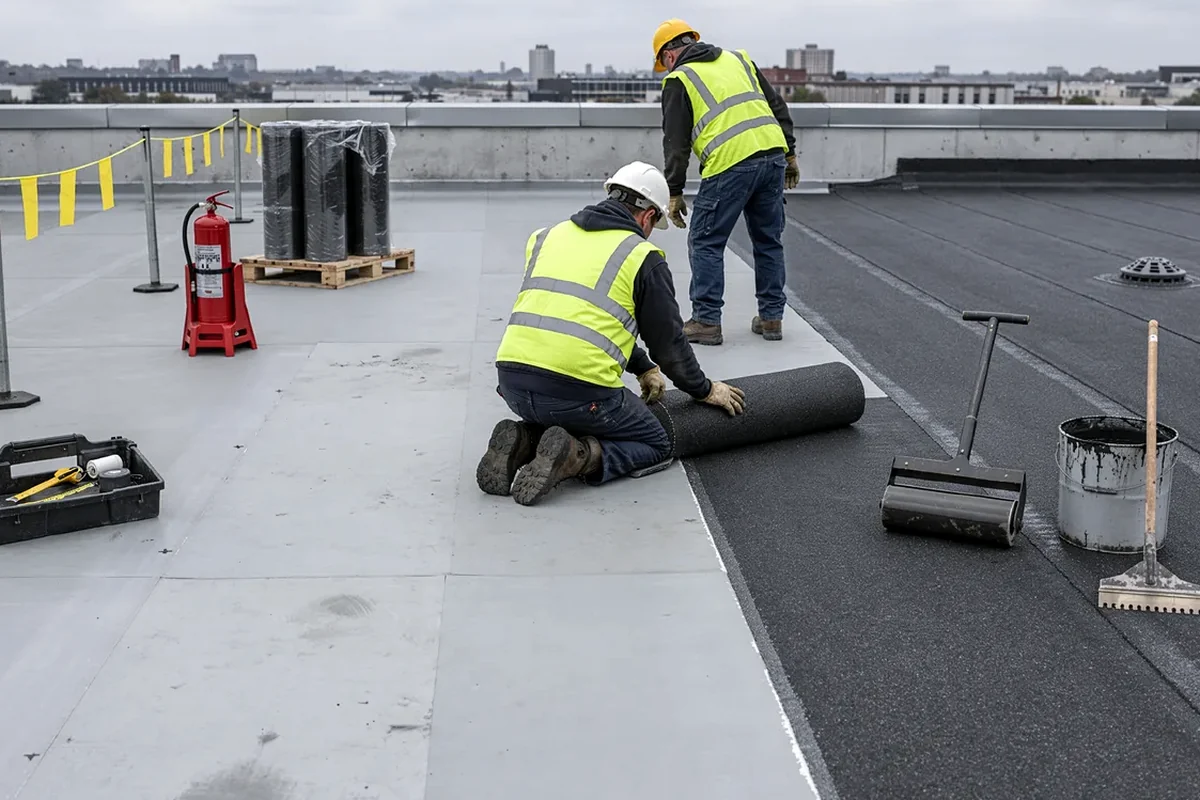
Layers at a glance
- Deck of plywood, planks or concrete
- Insulation or cover board where needed
- Base sheet
- Granulated cap sheet
- Edge metal and wall flashing
Each layer has a job, and a shortcut in one shows later as a leak.
Seams that lift or fish-mouth
A lapped edge that curls upward leaves a pocket for wind-driven rain. Causes include poor heat during install, movement in the deck and years of expansion. A roofer can often re-weld or patch a lifting seam if the sheet underneath is still sound.
Streets built in the 1980s commonly mix original roofs with later flat additions, and the tie-in between them is where a modified bitumen sheet gets its toughest test.
Gulf and bay exposure shortens the life of metal flashing on flat roofs, so ask what metal and fasteners the roofer will use.
Access and building height
A ground-level carport costs less to reach than a two-story flat deck needing a hoist. Lots shaded by oaks, tight alleys behind commercial strips and roofs packed with air handlers all add handling time that shows up in what you are quoted.
Local details for Safety Harbor
Roofing permits for Safety Harbor addresses go through the Pinellas County Building Services. Its published rule: all re-roofing projects must have an in-progress inspection, requested through the county's access portal or automated inspection phone line.
Under Florida's roof-claim rules, a roof contract must tell you to check coverage with your insurer, and a contractor offering to waive your deductible is breaking state law.
A reroof is a good time to add a secondary water barrier and better roof-to-wall connections; Florida's mitigation inspection form can turn those into windstorm premium discounts.
Closer to the water, wind-driven rain is the usual leak test for a Safety Harbor roof, so flashing, ridge vents and tile edges get extra attention.
Calls from Safety Harbor are often matched with roofers who also cover Clearwater, Oldsmar and Dunedin.
What happens on installation day
- Old roofing is stripped if the plan calls for it
- The deck is checked and repaired
- Base sheet goes down
- Cap sheet is fused and seams checked
- Edges and flashings are finished
Safe steps while you decide
- Look at the roof with binoculars from the ground
- Note bare black patches or curled seams
- Check ceilings under it after a storm
- Stay off the surface
Hot bitumen is soft and slick underfoot.
Torch-Down Roofing questions in Safety Harbor
Is torch-down roofing a good choice for a Florida flat roof?
Is the open flame a fire risk?
How many layers does torch-down have?
How is torch-down different from TPO?
More roofing services in Safety Harbor
Torch-Down Roofing nearby
Helpful guides
Sources
Last updated: